Universal Commerce Protocol (UCP)
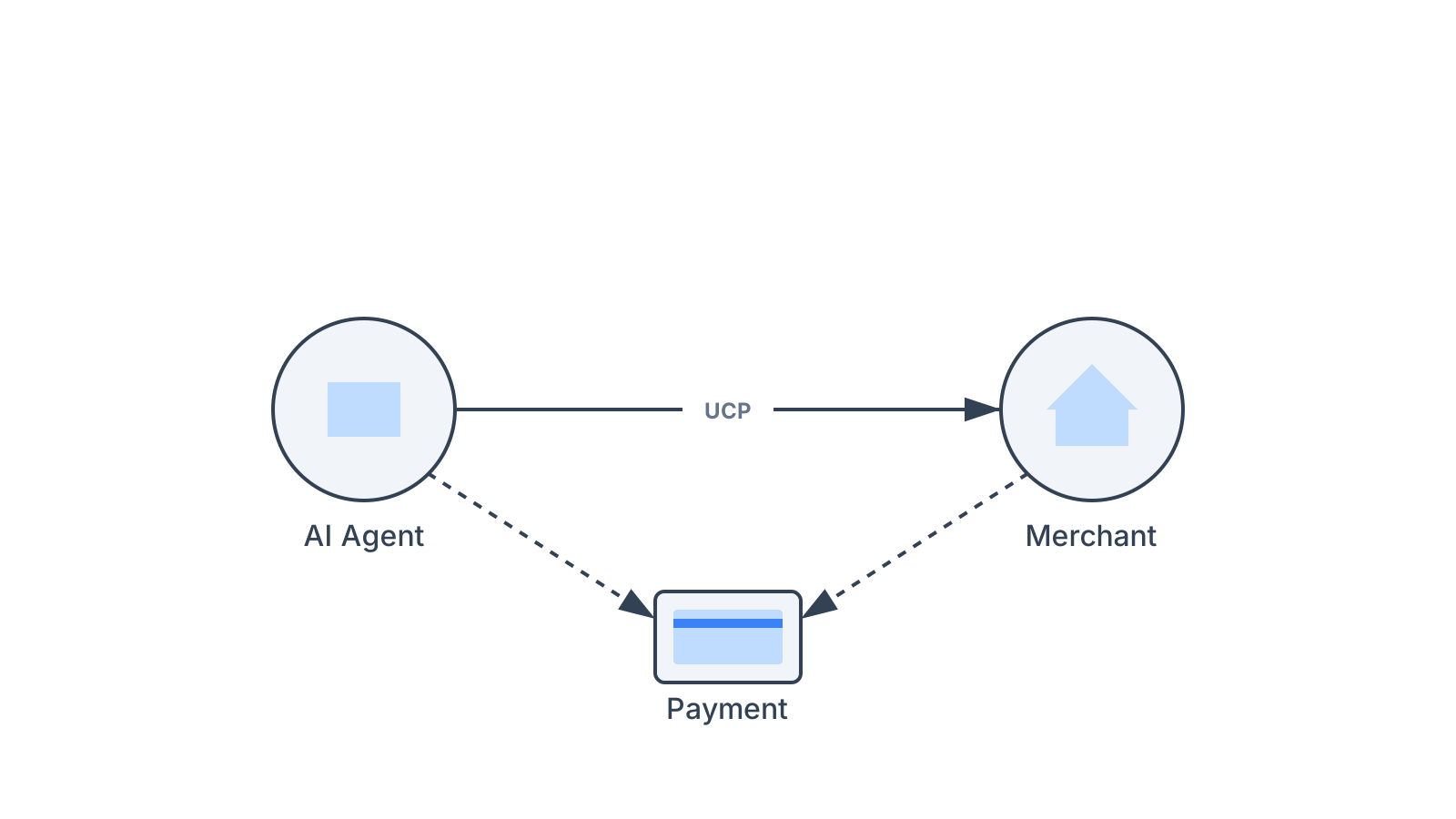
The Universal Commerce Protocol (UCP) is an open standard designed to enable "Agentic Commerce" — the ability for AI agents to discover products, negotiate, and transact on behalf of users.
Figure: Agentic commerce overview.
Why UCP?
In the current web, e-commerce is built for humans using browsers. We have visual storefronts, checkout flows, and customer support chats. However, for an AI Agent to "buy a ticket" or "order a pizza", it currently has to scrape websites or use fragile private APIs.
UCP solves this by providing a standardized way for:
- Agents to express intent ("I want a red shirt under $50").
- Merchants to expose inventory and capabilities ("I have these shirts").
- Transactions to happen securely without a human filling out a form.
Key Concepts
- Discovery: How agents find merchants.
- Negotiation: How agents and merchants agree on price and options.
- Execution: The actual transaction and payment.
Who is this for?
- Developers: Building AI assistants that need to do more than just talk.
- Merchants: Wanting to open a new sales channel (AI) without building custom integrations for every AI model.
Next Steps
- Start with the UCP Overview.
- Follow the Implementation Checklist.
- Compare protocols: UCP vs ACP and UCP vs MCP.